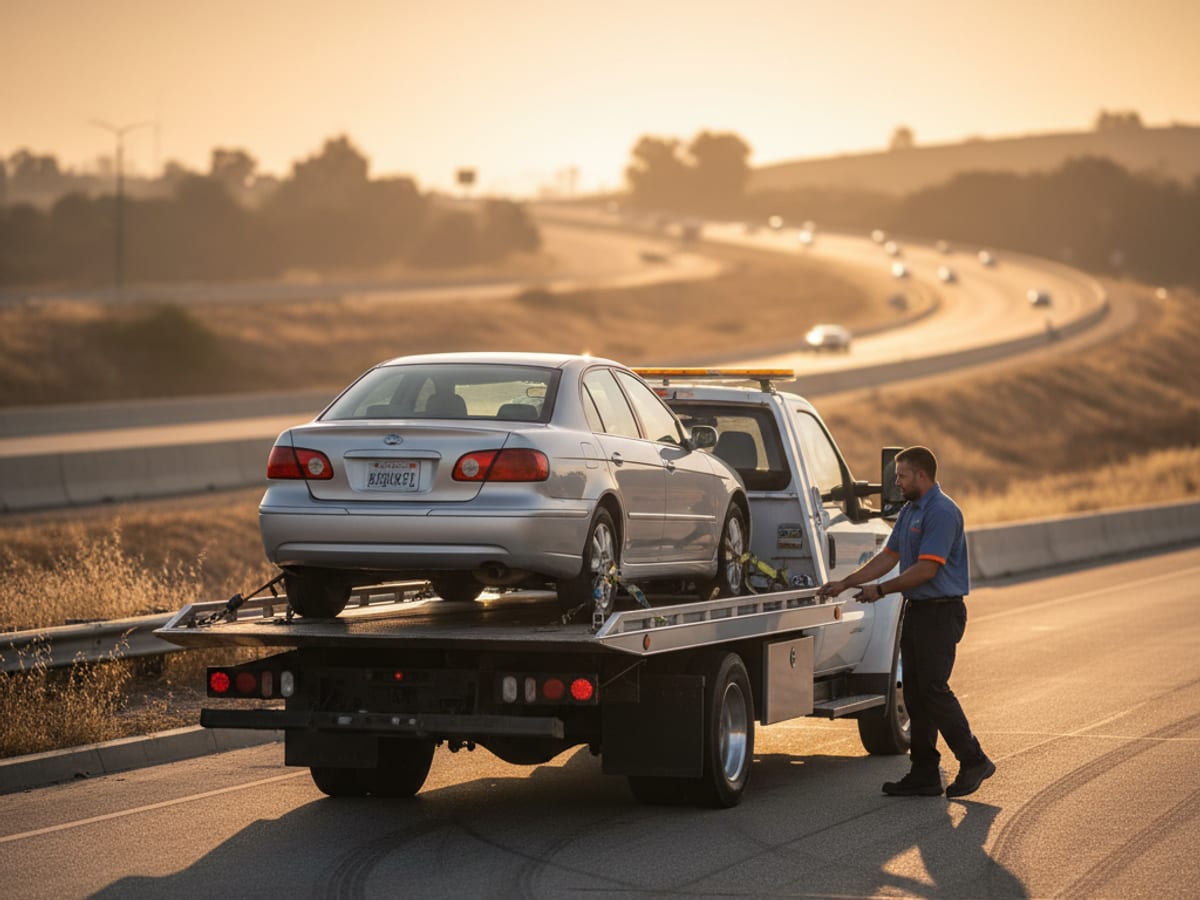
A long-distance tow out of San Antonio is priced as a consent tow, not a non-consent tow, which means the city’s fee caps under San Antonio City Code § 19-402 don’t apply. What you pay depends on three things: how far the vehicle has to go, what kind of vehicle it is, and what kind of equipment the operator needs to load and haul it. Here’s what actually drives the price on the I-35, I-10, and I-37 corridors that run out of San Antonio.
Why there’s no published rate
A long-distance tow is a service you arrange yourself with a licensed operator, the same as any other consent tow. The operator quotes the job before the truck rolls out, based on the distance, your vehicle, and what equipment the move needs. San Antonio’s § 19-402 fee caps only cover non-consent tows, meaning tows you didn’t arrange, like a private-lot enforcement tow or a police-ordered tow. Once you call and ask for a long-haul move to Austin, Houston, Dallas, or Corpus Christi, you’re in the consent category, and the price is whatever the operator quotes.
That doesn’t mean there’s nothing to know. Distance, weight, and equipment all move the number in predictable ways, and asking the right questions before the truck shows up keeps a quote from turning into a surprise.
The three corridors that leave San Antonio
San Antonio sits at the convergence of three major interstate corridors, and the one your tow uses is the first thing that determines your price.
I-35 north runs up through Selma, Schertz, New Braunfels, and San Marcos on the way to Austin and on to Dallas. A tow to New Braunfels is roughly 30 miles, a tow to Austin roughly 80 miles, and a tow to Dallas is over 275 miles from downtown. The corridor carries a heavy mix of passenger vehicles and commercial trucks, with 200,000+ vehicles per day on the Laredo-to-SA segment and roughly 48 percent commercial trucks. Operators running this route regularly can quote it tightly.
I-10 east runs out toward Seguin, San Marcos, and on to Houston. Seguin is about 35 miles from downtown, and Houston is roughly 200 miles. The same distance-and-weight logic applies, and the route through smaller towns can affect timing more than a straight interstate run.
I-37 south runs down toward Corpus Christi, about 140 miles from San Antonio, with a mix of Gulf Coast traffic and Hill Country commuters. The route passes through Pleasanton and Sinton before reaching the coast.
I-10 west heads toward Boerne and on toward El Paso, with Boerne about 30 miles from downtown. A long westbound tow into the Hill Country is more likely to involve rolling terrain and livestock or horse trailers than an eastbound run.
What moves the price
Once you know the corridor and the distance, four things change what an operator quotes you:
Vehicle weight and type. A sedan is a one-truck job. A heavy-duty pickup, an RV, a box truck, or a commercial vehicle needs bigger equipment, more axles, and sometimes a separate pilot vehicle. Heavy-duty towing has its own price tier, and the operator’s quote will reflect the difference.
Distance and route. Operators price per loaded mile, but the per-mile rate often steps down as the distance grows. A 30-mile hop to New Braunfels costs less per mile than a 200-mile run to Houston, but the total moves up because the miles stack. Watch for minimums, fuel surcharges, and pilot-car fees for oversized loads.
Time of day and dispatch. A long-haul tow scheduled for a Monday morning is easier to dispatch than one needed at 11 p.m. on a holiday weekend. Operators who run long-distance routes keep set schedules; an off-schedule tow can carry a premium because the operator is pulling a truck and driver off their planned run.
Equipment and difficulty. A standard flatbed can handle most cars and light trucks. A vehicle with a locked transmission, an exotic car that needs soft straps, or a non-running classic that needs a winch onto the deck adds equipment and time. Each one of those moves the quote up.
How to get a real quote before the truck arrives
Before you call, have these ready: your pickup location in San Antonio (or wherever the car is), the destination city, the year/make/model of the vehicle, whether it rolls and steers, and whether it has any specialty features the operator needs to know about (low ground clearance, all-wheel drive, aftermarket parts that change the way it loads). Send a photo of the car if you can; a quick visual saves the operator from guessing on the phone.
A legitimate operator will give you a number, or a tight range, on the phone once they have those details. If a company won’t quote anything until the truck arrives, that’s a signal to call someone else.
Why the corridors matter beyond distance
The corridor choice isn’t just about miles. The I-35 corridor runs through heavy freight traffic year-round, which means operators already run that route regularly and have set pricing for it. A run down I-37 to Corpus Christi or west on I-10 toward Boerne sees fewer long-haul tows, and an operator may quote a slightly higher per-mile rate simply because the route is less routine for them.
For destinations that fall between corridors, like Laredo, McAllen, or Lubbock, the operator will route you through one of the three main interstates, which adds a few miles but keeps the move on a route their drivers know. That routing usually won’t change the quote much, but it’s worth asking which interstate they’ll take if your destination is off the main line.
Related reading
For a consent tow inside the city, see tow truck near me in San Antonio. For the published city and state fee caps that do apply to non-consent tows, read how much does a tow cost in San Antonio.
Frequently asked questions
Is there a set long-distance tow rate from San Antonio? No. Long-distance tows are priced as consent tows, not capped by San Antonio City Code § 19-402. The operator quotes the job based on distance, vehicle weight, equipment, and timing.
How much is a tow from San Antonio to Austin? There’s no published rate. A quote depends on your specific vehicle, the time of dispatch, and whether the operator needs any specialty equipment. Call with your pickup location, vehicle, and destination for a real number.
Does the San Antonio city cap of $177 apply to a long-distance tow? No. The § 19-402 cap only applies to non-consent tows inside city limits. A consent long-distance tow is priced by the operator.
What’s the longest tow from San Antonio you might arrange? The major corridors reach Dallas (I-35), Houston (I-10), El Paso (I-10 west), and Corpus Christi (I-37). Operators run all four, but each is priced by distance and equipment rather than a flat rate.
Do I need a flatbed for a long-distance tow? Most long-distance tows use flatbeds because they’re safer for the vehicle over distance, especially all-wheel-drive cars, low-clearance exotics, and non-running vehicles. The operator will tell you what’s needed when they quote.
Can I save money by going with a cheaper operator? A lower quote is fine if the operator is licensed through TDLR and the quote is itemized. Watch for operators who can’t produce a license number or won’t give you a written quote before dispatch.