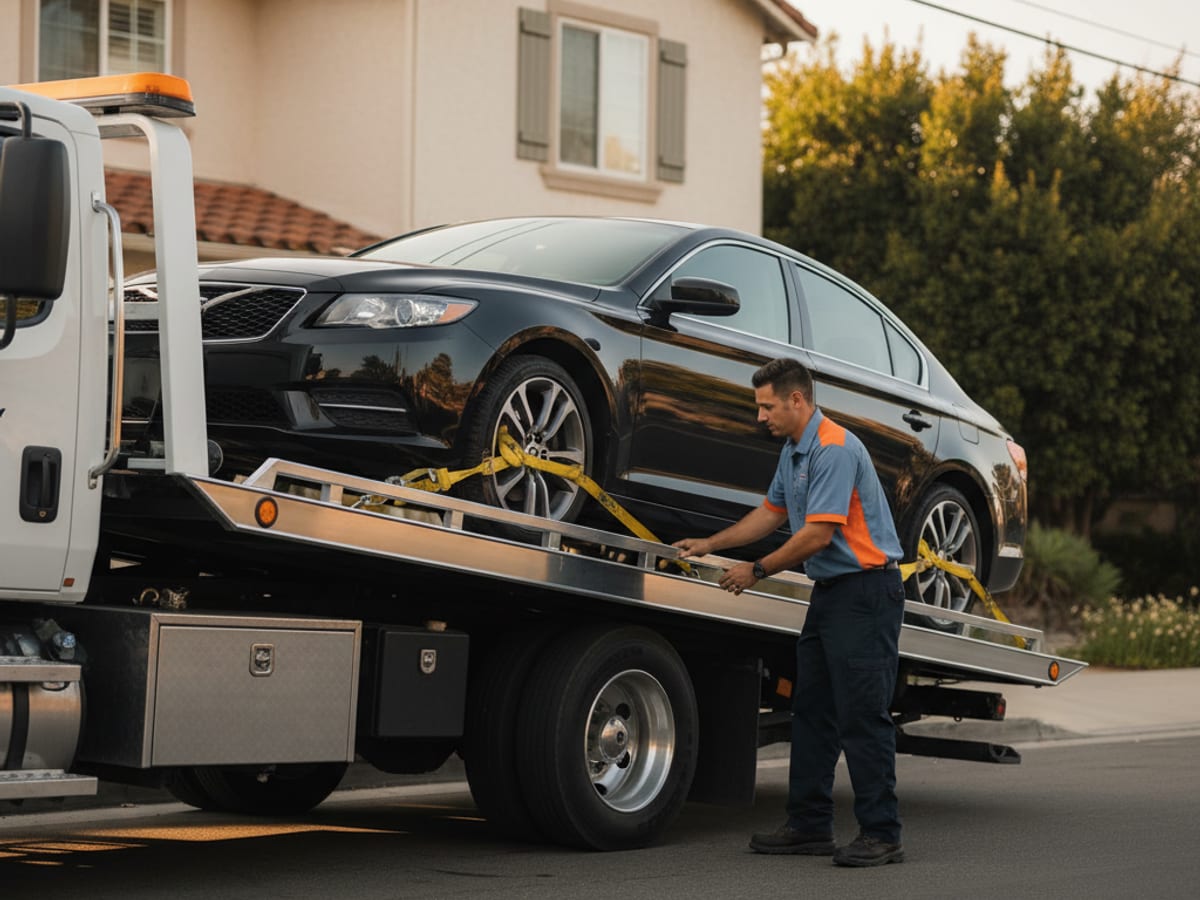
Quick Tow San Antonio does not publish a set price, because the operator who takes your call quotes the job before rolling out. What we can tell you are the only numbers anyone can promise in advance: the government caps. San Antonio’s city ordinance caps a non-consent tow at $177 for vehicles up to 10,000 pounds, $196 up to 24,999 pounds, and $602 at 25,000 pounds and over. Texas state law allows higher statewide maximums if no local cap applies. Everything else, your actual bill, depends on the tow you need.
Why we don’t quote a flat rate
A tow truck company that promises one price for every job is either padding the low end or guessing. A short flatbed hop across a parking lot costs less than a heavy-duty recovery off a shoulder on I-35. Distance, vehicle weight, time of day, and whether the job is a simple hookup or a technical recovery all move the number. We dispatch you to a licensed local operator, and that operator gives you the real price for your specific tow before any hook touches your car.
Consent tows versus non-consent tows
Texas splits towing into two categories, and the price rules differ.
A consent tow is one you ask for. You call because your car broke down, got in a wreck, or you need it moved. You and the operator agree on a price before the truck leaves the yard. Nothing caps that price by law, because you’re the one hiring the operator directly.
A non-consent tow is one nobody asked for: your car got towed from a private lot, a fire lane, or by the police for a code violation. You didn’t choose the operator and didn’t set the price, so both the city and the state regulate what they can charge.
The San Antonio city caps (Code § 19-402)
San Antonio’s city code sets the ceiling for non-consent tows inside city limits:
- Up to 10,000 lb: $177
- 10,001 to 24,999 lb: $196
- 25,000 lb and over: $602
On top of the tow itself, the ordinance also caps storage at $21.03 per day plus tax ($36.80 for vehicles 25 feet or longer), a notification fee of $50, and a police impound fee of $20. The ordinance is specific about what an operator can’t charge, too: no dolly fee, no mileage fee, no special-equipment fee tacked on beyond those listed. A lot has to take an e-check, debit card, or credit card, not just cash.
The Texas statewide caps (TDLR)
The Texas Department of Licensing and Regulation sets a higher statewide ceiling that applies where no local ordinance sets a lower one: $272 up to 10,000 pounds, $380 for 10,001 to 25,000 pounds, and $489 per unit (up to $978 total) at 25,000 pounds and over. Storage runs $22.85 a day for vehicles 25 feet and under, $39.99 for anything longer. The notification fee is also $50, and the impound fee is $22.85.
Here’s the fact worth remembering: San Antonio’s city caps sit below the state’s maximums. A local ordinance is allowed to set a lower ceiling than TDLR’s statewide number, and San Antonio did. That means if your car gets towed inside the city, the ordinance protecting you is often the tighter one.
What actually moves your price on a consent tow
Since consent tows aren’t capped, here’s what changes what an operator quotes you:
- Distance. A tow across town costs more than one across the street. Long hauls out toward New Braunfels, Boerne, or Seguin run higher than a local move inside Loop 410.
- Vehicle weight and type. A heavy-duty pickup, an RV, or a commercial vehicle needs bigger equipment than a sedan, and bigger equipment costs more to run.
- Time of day. A 2 a.m. call on I-10 costs more to dispatch than a midafternoon call on a quiet street.
- Difficulty. A car sitting flat in a driveway is a five-minute hookup. A car in a ditch off Loop 1604 after a low-water crossing, or wedged against a guardrail after a Bexar County crash, takes more time, more equipment, and sometimes a winch-out first.
- What kind of tow you need. Flatbed, wheel-lift, heavy-duty, and specialty moves like exotic or classic car transport all price differently. See our tow services page for what each one covers.
What to ask before the truck shows up
Ask for the price before you say yes. A legitimate operator gives you a number, or a clear range, over the phone once they know your location, your vehicle, and where it’s going. If a company won’t quote anything until the truck arrives, that’s a signal to call someone else.
Related reading
If your car is already gone and you’re trying to find it, read where is my towed car in San Antonio. If you need a truck dispatched right now, see how to get a tow truck near you in San Antonio.
Frequently asked questions
Is the $177 city cap the most I’ll ever pay for a tow in San Antonio? No. That cap only applies to non-consent tows under 10,000 pounds inside city limits. A consent tow you request yourself isn’t capped, and heavier vehicles or county tows outside the city may fall under different rules.
Why are the state maximums higher than the city’s? Texas law lets a local government set a lower non-consent cap than the state’s statewide ceiling. San Antonio did that with Code § 19-402, so a tow from a private lot or a police impound inside the city is usually cheaper than the state maximum would allow.
Can an operator charge me a dolly fee or a mileage fee on top of the tow? Not on a non-consent tow inside San Antonio. The city ordinance specifically bars dolly, mileage, and special-equipment charges beyond the listed fees.
Does Quick Tow San Antonio charge these prices? We’re a dispatch service. We connect you with a licensed local operator who quotes and performs the tow. Your price comes from that operator, not from us.
What if I think I was overcharged? Ask the operator for an itemized receipt referencing the city or state fee schedule. If a non-consent tow exceeded the § 19-402 caps, that’s a code violation you can raise with the city.
Does storage keep adding up the longer my car sits? Yes, both the city and state caps include a daily storage rate, and by state rule storage charges max out at five days unless you were notified. Get your car out sooner rather than later to keep the bill down.