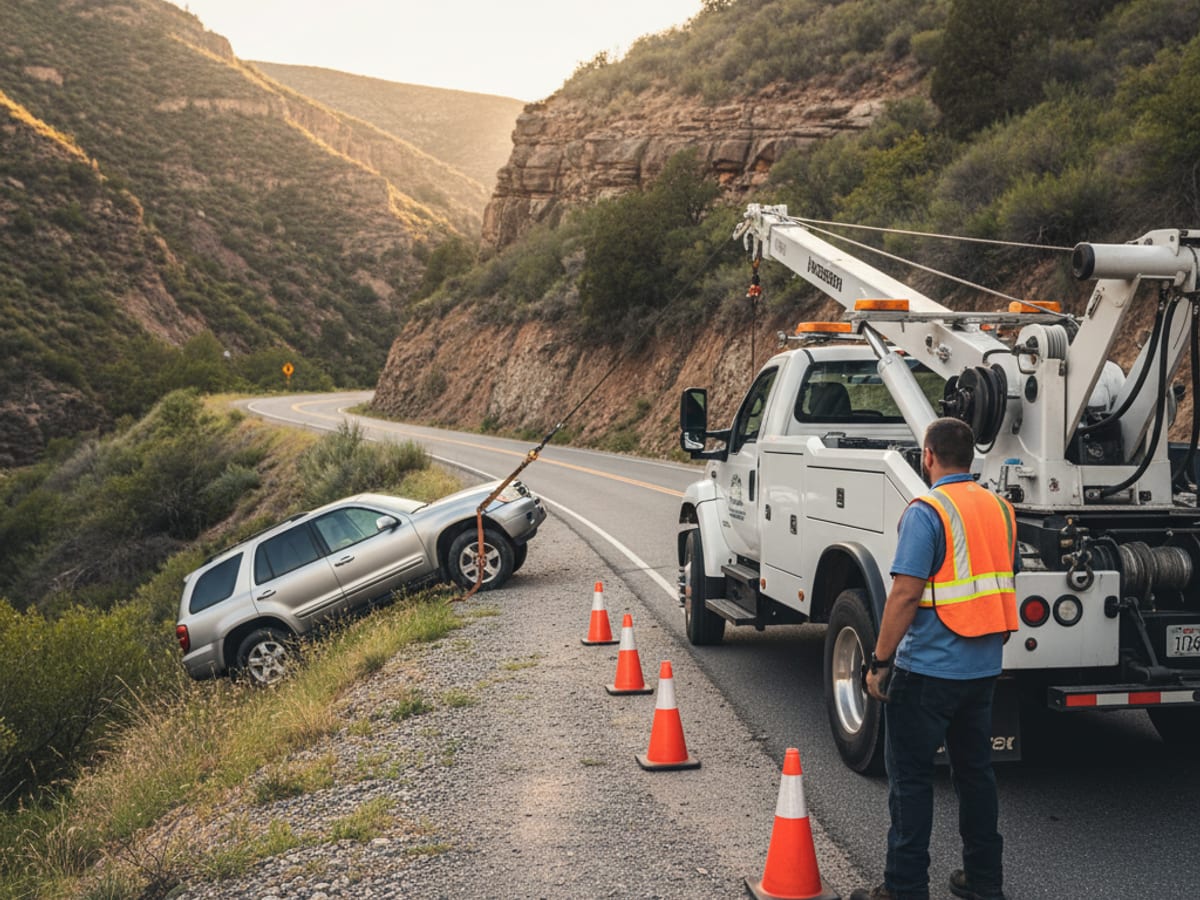
Your car has stalled in water and it’s rising. Here’s what matters most right now: get out of the car and get to high ground. Do that before you worry about the vehicle at all.
Safety comes first, every time
Turn Around Don’t Drown is more than a slogan here. San Antonio sits in Flash Flood Alley, one of the most flash-flood-prone regions in the country, because of steep terrain and soil that doesn’t absorb water fast. Just 12 to 18 inches of moving water can float a vehicle and carry it off the roadway, car and all. If your car has stalled in rising water, don’t wait to see if it clears.
Get out through a window if the doors won’t open against the water pressure. Move to higher ground away from the car and the current. Only call for help once you’re safely out and away from the water. Your safety comes before the vehicle, before the paperwork, before anything else.
Why 2025 made this urgent for San Antonio
2025 was San Antonio’s deadliest flood year since 1998, with 15 flood deaths citywide and more than 70 water rescues in a single storm. That’s not a distant risk. It’s a pattern that’s been getting worse, and low-water crossings are where it plays out most often.
The ten most dangerous low-water crossings, based on a decade of San Antonio Fire Department rescue data, all sit north of US-90. Several cluster around Salado Creek. These are the spots where water rises fast and catches drivers who’ve made the crossing safely a hundred times before. Local knowledge of “it’s usually fine” doesn’t hold during a real storm.
Bexar County has responded by running 150 HALT sensor sites, high-water detection systems that monitor crossings and warn drivers when conditions turn dangerous. Watch for those warnings and barricades, and never drive around one.
Once you’re safe, here’s what happens to the car
A car that stalled in flood water isn’t something you push out or jump-start later. Water in the engine, electrical system, or cabin can cause serious damage that gets worse the more you try to move or start the vehicle. A flooded car needs a flatbed tow, not a push, a pull, or an attempt to drive it out once the water recedes.
Don’t try to restart the engine if it stalled in water. Water in the cylinders can cause major engine damage the moment you turn the key. Wait for a tow.
What to do after you’re safe
Once you and anyone else in the car are on high ground and out of danger, call for a tow. Give the dispatcher your exact location, including the crossing name or nearest cross street if you know it. Flooded roads can make it hard for a tow truck to reach you quickly, so be ready to describe alternate access points if the direct route is still underwater.
If the water hasn’t receded yet, wait for it to clear before any tow truck attempts to reach the vehicle. No tow is worth someone else getting caught in the same water that stalled your car.
Quick Tow San Antonio can help once you’re safe
Once you’re safely away from the water, call (210) 791-9982 and we’ll dispatch a local towing partner to get your car onto a flatbed. We coordinate the tow; the operator who arrives handles moving the vehicle. Don’t call until you’re safe. The car can wait. You can’t.
Frequently asked questions
How much water does it take to move my car? As little as 12 to 18 inches of moving water can float a vehicle and sweep it off the road. That’s not much more than a foot of water.
Should I try to restart my car after it stalls in water? No. If water has entered the engine, restarting it can cause serious internal damage. Wait for a flatbed tow instead.
How do I know which crossings are dangerous? The ten most dangerous low-water crossings identified from a decade of San Antonio Fire Department rescue data all sit north of US-90, with several clustered around Salado Creek. Treat any low-water crossing as dangerous during heavy rain, not just the ones on a list.
What are the HALT sensors I keep hearing about? Bexar County runs 150 HALT high-water detection sites that monitor low-water crossings and alert drivers to rising water. Respect any warning or barricade you see at a crossing.
Can a regular tow truck pull my car out of a flooded crossing? A car that stalled in flood water needs a flatbed, not a standard tow. Trying to drive or push it out risks more damage and, if the water is still moving, real danger to anyone near it.
Is it safe to walk back to my car once the water looks lower? Wait until the water has fully receded and it’s clearly safe before approaching the vehicle again. Water levels at a low-water crossing can look deceptively calm while still moving with force underneath.