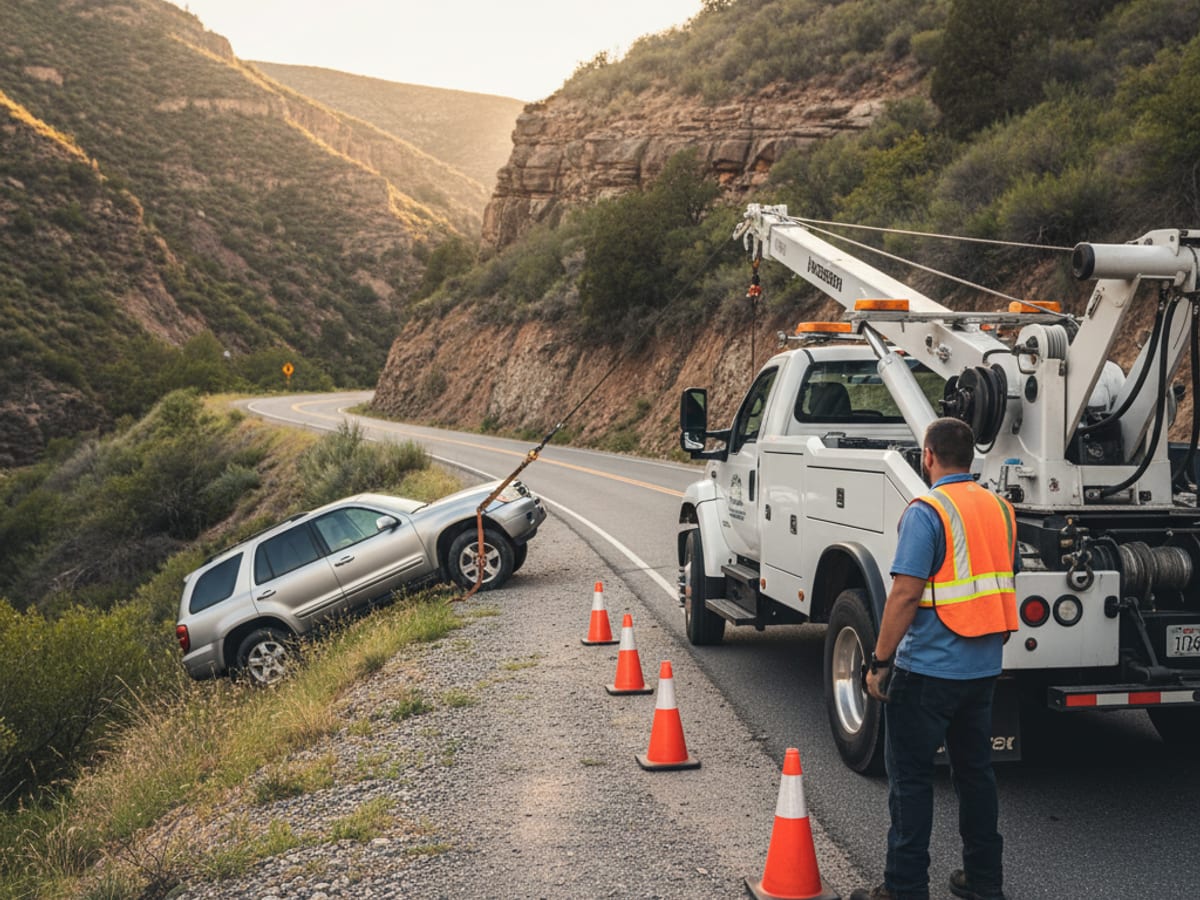
In Texas, a vehicle storage facility can hold your car until you pay the tow and storage fees, but the rules around your personal belongings inside that car are different from the rules around the car itself. The yard is licensed through the state, and personal items generally don’t get treated like the vehicle for purposes of release. Here is what Texas rules and the San Antonio release process actually cover, and what to do if a yard won’t return something that’s yours.
The yard is a licensed facility
Any vehicle storage facility (VSF) holding a towed car in Texas has to be licensed through the Texas Department of Licensing and Regulation, the same agency that licenses tow operators and towing companies. The framework comes from the Texas Towing and Booting Act, Occupations Code Chapter 2308, with operational rules in 16 TAC Chapters 85 and 86. A yard that can’t produce a TDLR license number when you ask is a red flag, since TDLR is exactly the agency that oversees complaints about a facility’s handling of vehicles and stored property.
That state oversight is the lever you have if a facility refuses to release personal items that aren’t part of the vehicle itself. The yard’s authority over the car comes from being a licensed VSF; that same license is the thing that has to follow state rules when it comes to what’s inside.
What the San Antonio release process covers
For a tow handled inside San Antonio city limits, City Code § 19-54 sets what you need to get the vehicle released: your certificate of title or other satisfactory proof of ownership, plus payment of the tow and storage charges. A representative picking up the car on your behalf needs the title and a notarized owner authorization, and you’ll sign an indemnification agreement at pickup. That’s the path for the car.
The question of personal items inside the car is separate. A licensed VSF has to handle stored property in line with state rules, not invent its own policy about which items count as “yours” versus “the car’s.” Standard practice in Texas is that personal belongings not attached to the vehicle, things in the trunk, a child seat in the back, clothes, tools, papers, can typically be retrieved separately from the car itself, often without paying the full tow and storage bill to release those items alone. The exact process varies by yard, which is why calling ahead and asking what the facility requires is worth the five minutes.
What tends to count as a personal item
Items that travel with you and aren’t bolted to the car, including a child safety seat, groceries, a laptop bag, work tools, prescriptions, and personal documents, are typically treated as personal property rather than part of the vehicle. Items that are mechanically attached to the car, like a stereo head unit hardwired into the dash, a mounted GPS, custom wheels, generally travel with the vehicle rather than getting released separately.
If you’re not sure whether something counts, ask the yard before you go. A facility that won’t give you a straight answer over the phone is itself a signal worth raising with TDLR later.
What to bring when you go to the yard
For the car release under SA § 19-54, bring your certificate of title or other satisfactory proof of ownership, your photo ID, and payment for the tow and storage. For personal items, bring your ID and any proof the items are yours, like a receipt for the laptop, a photo of the child seat installed in the car, or anything else that ties the items to you rather than to the car.
Some yards will let you retrieve personal items without paying the full tow and storage bill. Others treat the personal items as leverage until you pay to release the car. That’s where the state licensing framework matters: a TDLR-licensed facility can’t apply its own private rule that conflicts with state rules on stored property. If a yard refuses to release items that clearly belong to you, that refusal is something to raise with TDLR.
What to do if a yard won’t return your belongings
Start by getting the specific reason in writing. Ask the facility manager for the exact reason they’re holding the items and ask which state rule or local ordinance they’re applying. If they can’t name one, that’s a signal the refusal isn’t grounded in a published rule.
Next, file a complaint with TDLR. The agency licenses the facility, so a complaint about how stored property is being handled falls under their authority. Include the yard’s name, the date you tried to retrieve your items, the items in question, and the response you got. Photos of the items in the car before the tow, if you have any, help.
If the items have real value and the yard still won’t release them, a small claims court action is another path. A judge is more likely to side with you when the facility can’t point to a specific rule allowing the hold. Document everything from the first call forward.
Related reading
If your car is at the city lot and you need to know where to find it, read where is my towed car in San Antonio. For the release paperwork and what to bring, see how to get a car out of impound in San Antonio.
Frequently asked questions
Can a Texas tow yard keep my personal belongings until I pay for the car? A licensed vehicle storage facility has to follow state rules on stored property, and items not attached to the car are typically handled separately from the vehicle release. Ask the yard what its policy is and what state rule it applies.
What counts as a personal item versus part of the car? Items that travel with you and aren’t bolted to the car, like a child seat, groceries, a laptop, tools, and prescriptions, are typically personal property. Mechanically attached parts like a hardwired stereo usually travel with the vehicle.
What if a yard refuses to return my belongings without paying the tow? Get the refusal in writing, ask which state rule the yard is applying, and file a complaint with TDLR, which licenses the facility. A small claims court action is another path for items of real value.
Do I need my title to pick up personal items from the yard? For the vehicle release under San Antonio City Code § 19-54, you need your certificate of title or other satisfactory proof of ownership. For personal items alone, a photo ID and proof of ownership of the items is usually enough, though the yard’s policy varies.
Who licenses tow yards in Texas? The Texas Department of Licensing and Regulation (TDLR), under the Texas Towing and Booting Act, Occupations Code Chapter 2308, and 16 TAC Chapters 85 and 86.
Where do I file a complaint about a Texas tow yard? With TDLR directly. The agency licenses vehicle storage facilities, so a complaint about how stored property is being handled falls under its authority.