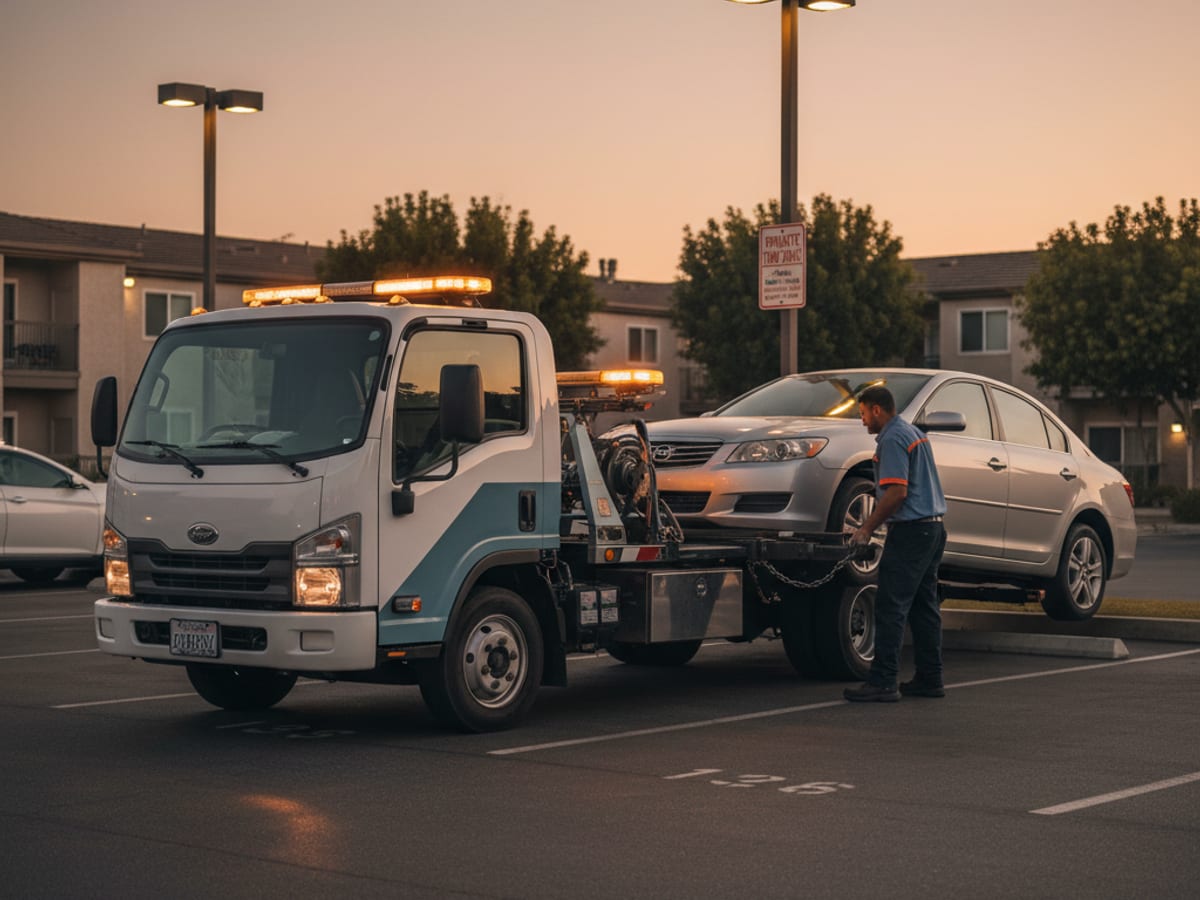
Repossession and towing are two different things under Texas law, and they follow different rules. A tow is performed by a licensed operator under the Texas Towing and Booting Act and overseen by the Texas Department of Licensing and Regulation. A repossession is the lender, or its agent, recovering a vehicle the borrower has stopped paying for. The rules around entering private property differ between the two, and knowing which scenario you’re actually in matters.
Tow versus repo: which one is this
A tow is what happens when your car is removed from a private lot, a fire lane, or by police order for a code violation. The operator has to be licensed through TDLR, the paperwork follows a published set of rules, and fee caps apply to non-consent tows under both San Antonio City Code § 19-402 and the statewide TDLR maximums.
A repossession is what happens when you financed or leased a vehicle, stopped making payments, and the lender decides to take the vehicle back. The lender doesn’t need a tow operator for the legal act of repossession, because the lender, or its hired agent, is recovering its own collateral. A licensed tow operator may still physically move the vehicle once it’s been recovered, and that operator’s tow ticket and fee structure is what applies to the storage and release. The repossession itself, the act of taking the vehicle, is a separate legal process governed by secured-transactions law, not the towing act.
That distinction is what decides which set of rules applies when a vehicle leaves your property without your permission.
What a repo agent typically can do
In general, a repossession agent can recover a vehicle from public property, from an open driveway, or from any other location where the agent doesn’t have to physically enter a closed or locked space to reach the vehicle. The legal right of repossession comes from the borrower having granted a security interest in the vehicle when the loan was made, and the lender’s remedy when the loan goes unpaid is to take the collateral back.
The repossession has to happen without a breach of the peace. That phrase matters: forcing entry into a closed garage, confronting the borrower in a way that escalates into a physical altercation, or using threats or force to take the vehicle can convert a lawful repossession into an unlawful one. Whether a specific entry crossed that line is a fact question that depends on what actually happened, and courts look at cases individually when borrowers raise it.
What is more limited
A repo agent cannot break into a closed or locked space to get to the vehicle. They can’t enter your house, climb over a locked gate, force open a garage door, or otherwise commit a trespass or a breach of the peace to reach the car. If the vehicle is inside a closed garage, behind a locked gate, or otherwise in a space the agent can’t reach without forcing entry, the agent generally has to come back when the vehicle is somewhere it can be lawfully recovered, or pursue a court order.
A repo agent also can’t pretend to be law enforcement, claim police authority they don’t have, or use deception to get you to bring the vehicle outside. The line between lawful and unlawful repossession is drawn around what actually happened at the moment of recovery, and any of those actions can push the recovery outside the law.
What to do if you think a repo went wrong
Get the facts down while they’re fresh. Write down the date and time, what the agent looked like, what vehicle they took, what they said, and whether anything was damaged during the recovery. Photos of the scene, including any damage to your property, a gate that was forced, or marks on the driveway, all help.
Ask the lender, in writing, for the name of the repossession agent and the date of the recovery. A lender is in a position to confirm those details, and the confirmation creates a record if you end up disputing what happened.
If you believe the agent broke into a closed space, used force, or otherwise crossed the line, talk to a Texas attorney who handles consumer or secured-transactions cases. The Self-Help Resources page on the Texas Courts website can help you find one. A lawyer can tell you whether the facts you’ve documented support a claim that the repossession was unlawful, and what remedy makes sense.
How this differs from a tow
If the agent who took your vehicle was a tow operator working for a private property owner, the rules under the Texas Towing and Booting Act apply, including the signage requirement under San Antonio City Code § 19-391 and the licensing requirement under Occupations Code Chapter 2308. You can dispute the tow with the property owner and the operator, and you can file a complaint with TDLR.
If the agent was acting for the lender, the rules are different. The lender’s right to repossess comes from the security agreement you signed, not from the towing act. The remedy for a wrongful repossession typically runs through the courts, not through TDLR. Knowing which one you’re actually dealing with is the difference between filing the right complaint and spending time on the wrong one.
Related reading
For what a tow operator needs to lawfully tow from a private lot in San Antonio, see private property towing sign requirements in Texas. For what to do when your car is at the city lot, read how to get a car out of impound in San Antonio.
Frequently asked questions
Can a repo agent come onto my driveway in Texas? In general, a repo agent can recover a vehicle from a location they can reach without forcing entry, including an open driveway. The repossession has to happen without a breach of the peace.
Can a repo agent break into a closed garage to take my car? No. Forcing entry into a closed or locked space crosses the line from a lawful repossession into an unlawful one. The agent has to wait until the vehicle is somewhere they can reach without forcing entry, or pursue a court order.
Is a repossession the same as a tow? No. A tow is performed by a TDLR-licensed operator under Occupations Code Chapter 2308. A repossession is the lender, or its agent, recovering collateral under secured-transactions law. Different rules, different remedies.
Who do I contact if I think a repo agent used force or deception? A Texas attorney who handles consumer or secured-transactions cases. The Texas Courts website Self-Help Resources page can help you find one. Document what happened before you call.
How do I find out which company repossessed my car? Ask the lender in writing for the name of the repossession agent and the date of the recovery. The lender is in a position to confirm those details.
Can a repo agent claim to be the police? No. A repo agent can’t claim police authority they don’t have, and using that kind of deception can convert a lawful repossession into an unlawful one.