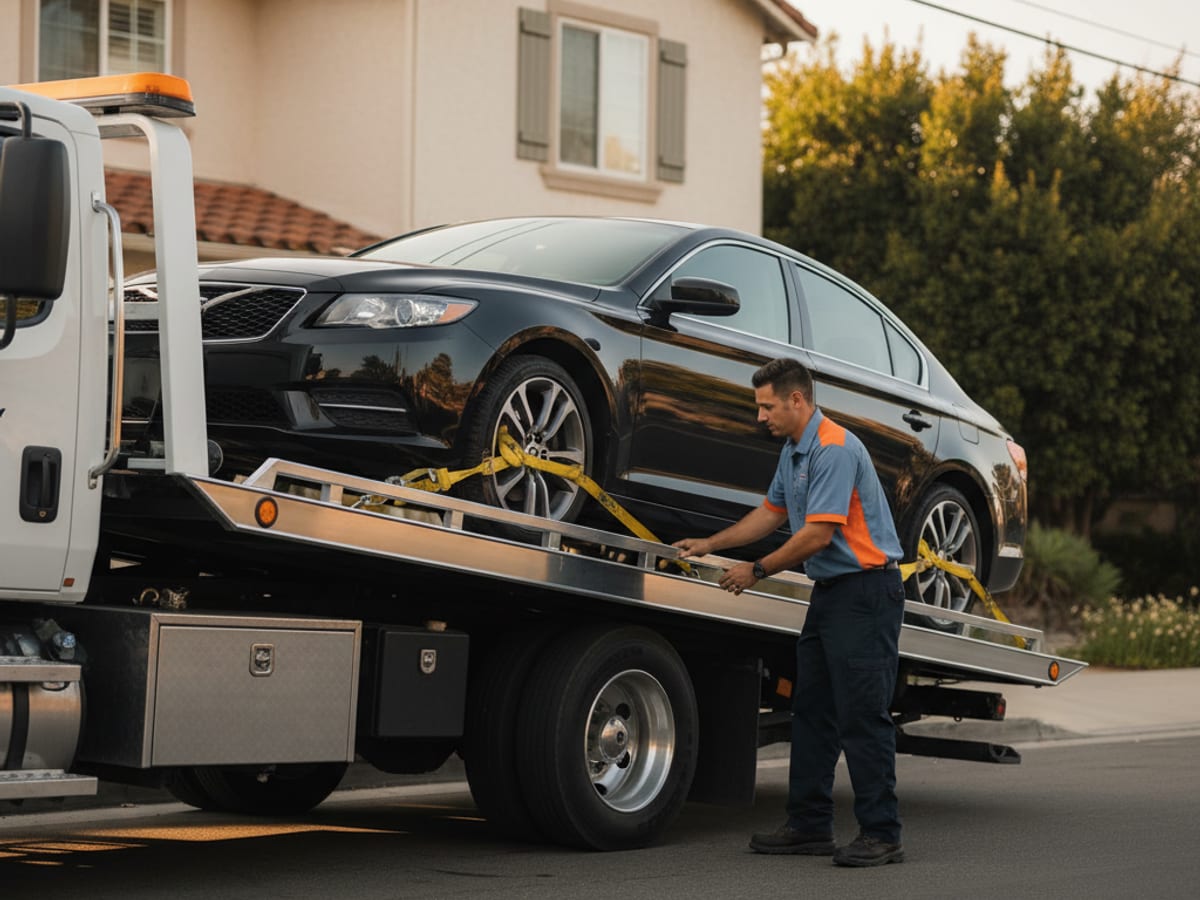
Yes, towing fees are regulated in Texas. The state sets maximum fees for non-consent tows through the Texas Department of Licensing and Regulation, and cities are allowed to set their own caps as long as they’re lower than the state maximum. San Antonio does exactly that, with city rates below the statewide ceiling.
Two layers of regulation
Texas towing fees work on two levels. The state, through TDLR, sets the ceiling: the highest amount any licensed operator can charge for a non-consent tow anywhere in Texas. A city or county can then adopt its own local ordinance that sets a lower cap for tows happening inside its jurisdiction. What a city can’t do is set a cap higher than the state maximum.
This only applies to non-consent tows, meaning tows you didn’t personally arrange, like a private-lot enforcement tow, a police-ordered tow, or an abandoned-vehicle tow. If you call a tow company yourself because your car broke down, that’s a consent tow, and the price is whatever you and the operator agree to. No cap applies, because you chose the operator and negotiated the terms.
The Texas statewide caps
TDLR’s biennial non-consent tow fee schedule, current as of 2023, sets these statewide maximums:
- Up to 10,000 lb: $272
- 10,001 to 25,000 lb: $380
- Over 25,000 lb: $489 per unit, capped at $978
Beyond the base tow fee, TDLR also caps storage at $22.85 per day for vehicles 25 feet or shorter and $39.99 per day for longer vehicles, a $50 notification fee, and an impound fee capped at $20. Storage charges are capped at a maximum of 5 days unless the owner was properly notified sooner. Drop fees, charged if you stop the tow before the vehicle leaves, are capped at $135, $190, or $244 by weight class.
San Antonio’s lower city caps
San Antonio adopted its own non-consent tow fee schedule under City Code § 19-402, and the city’s numbers sit below the state maximum:
- Up to 10,000 lb: $177
- 10,001 to 24,999 lb: $196
- 25,000 lb and over: $602
Local storage is capped at $21.03 per day plus tax, or $36.80 for vehicles 25 feet or longer, with the same $50 notification fee and a $20 police impound fee. The ordinance is specific that no other charges are allowed beyond what’s listed: no dolly fee, no mileage fee, no add-on for special equipment. A lot or operator has to accept e-check, debit, or credit card, not just cash. An operator that violates the fee schedule faces a city fine of $200 to $500 under § 19-413.
The practical takeaway: if your tow happened inside San Antonio city limits, the city’s lower numbers are what should show up on your bill, not the higher statewide maximum.
Where regulation doesn’t reach
None of this caps what you agree to pay for a tow you arrange yourself. If your car breaks down and you call an operator directly, the price is a private agreement, and it can reasonably vary based on distance, vehicle weight, time of day, and whether the job is a simple hookup or a technical recovery. Regulation exists specifically for the situations where you didn’t get to choose the operator or negotiate the price.
What to do if a fee looks wrong
Ask which fee schedule applies, city or state, based on where the tow happened. Compare the amount charged against the applicable caps above. If the charge is higher than it should be, raise it with the tow company first, and file a complaint with TDLR if that doesn’t resolve it, since TDLR licenses every operator doing non-consent towing in the state.
Why the two-tier system exists
The split between state and city regulation exists because towing conditions aren’t the same everywhere in Texas. A rural county with one licensed operator and long tow distances has different cost realities than a dense city with dozens of operators competing for the same lots. TDLR’s statewide cap sets a ceiling that protects drivers everywhere, even in places with no local ordinance at all. A city like San Antonio, with enough operator volume and enough call data to justify it, can then set a tighter local number that still lets operators run a real business while keeping non-consent tows from becoming a windfall.
That’s also why the caps get revisited periodically rather than staying fixed forever. TDLR reviews its statewide schedule on a biennial cycle, and a city ordinance can be amended by the council that adopted it. Rates you saw quoted a few years ago aren’t necessarily the ones in effect today, which is another reason to check the current published number rather than relying on what a friend or a search result from an older year says.
Reading your tow receipt
When you pick up your vehicle, the paperwork should itemize each charge separately: the base tow fee, storage per day, the notification fee, and the impound fee if one applies. A single lump-sum number with no breakdown makes it hard to check anything against the caps. You’re entitled to see how a total was built, and a licensed operator following TDLR’s tow-ticket requirements under 16 TAC § 86.709 should already be providing that breakdown as a matter of course, not as something you have to request.
Frequently asked questions
Are all towing fees in Texas capped by law? Only non-consent tows, meaning tows you didn’t personally arrange. Consent tows, where you call and hire an operator directly, aren’t price-capped.
What’s the statewide maximum tow fee in Texas? TDLR’s current caps are $272 up to 10,000 pounds, $380 for 10,001 to 25,000 pounds, and $489 per unit up to $978 for vehicles over 25,000 pounds.
Does San Antonio have its own fee caps? Yes, and they’re lower than the state maximum: $177, $196, and $602 for the same weight classes, under City Code § 19-402.
What can a tow company charge beyond the base fee? Storage, a notification fee, and an impound fee, each capped separately. San Antonio’s ordinance specifically bars dolly, mileage, or special-equipment add-ons.
What happens if an operator charges more than the cap? That’s a violation of the fee schedule. San Antonio’s ordinance sets a fine of $200 to $500 for violations, and you can also file a complaint with TDLR against the operator’s license.
Which cap applies if my car was towed in San Antonio? The city’s lower caps under § 19-402 apply to tows inside city limits.